
RA en architecture : les visites immersives redéfinissent l'expérience
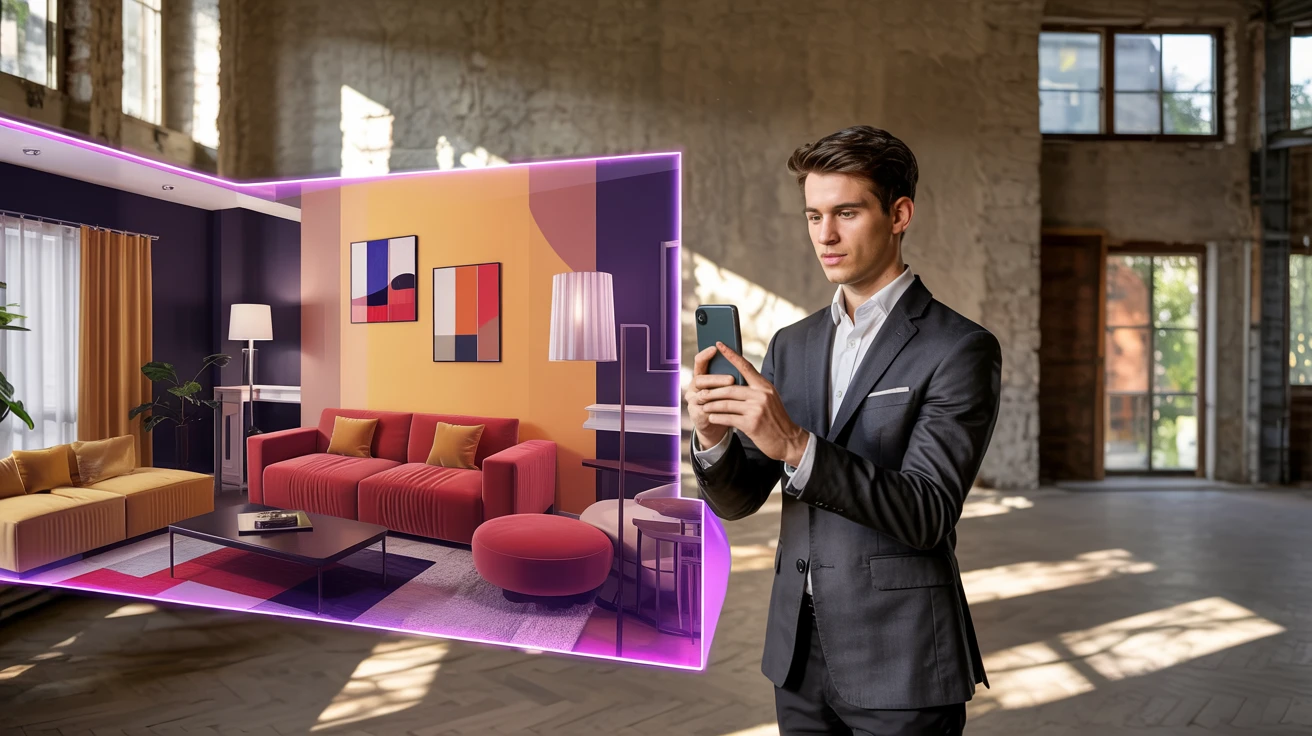
La réalité augmentée (RA), cette technologie qui superpose des éléments virtuels sur le monde réel, a trouvé un terrain de jeu privilégié dans le domaine de l’architecture. Grâce à des applications innovantes, la RA transforme non seulement la conception des bâtiments mais aussi l’expérience utilisateur lors des visites architecturales. Plus qu’une simple visualisation de modèles, elle permet désormais des visites immersives où l’utilisateur peut interagir avec les bâtiments, visualiser des espaces inaccessibles, ou même vivre des simulations architecturales. Mais comment cette technologie influence-t-elle notre façon de découvrir, d’expérimenter et de comprendre l’architecture ?
Réalité Augmentée : Un Nouvel Outil de Conception pour les Architectes
Avant de se concentrer sur les visites immersives, il est important de comprendre comment la RA intervient dans le processus de conception architecturale. Traditionnellement, les architectes utilisaient des plans en 2D ou des maquettes physiques pour représenter des projets. Aujourd’hui, grâce à la RA, ces outils ont évolué vers des modèles 3D interactifs qui peuvent être projetés dans le monde réel.
Avec la RA, les architectes peuvent :
- Visualiser et tester leurs conceptions à l’échelle réelle.
- Superposer des modèles 3D de bâtiments sur des sites réels pour observer comment la construction s’intègre dans son environnement.
- Identifier des problèmes potentiels (problèmes d’échelle, harmonie, lumière du soleil, etc.) même avant le début de la construction.
L’Émergence des Visites Immersives Grâce à la Réalité Augmentée
Les visites immersives sont l’une des applications les plus fascinantes de la RA dans le domaine de l’architecture. Loin de se limiter à une simple exploration visuelle d’un bâtiment ou d’un espace, ces visites permettent aux utilisateurs de plonger dans des environnements virtuels ou augmentés où ils peuvent interagir avec des éléments en temps réel.
Visites de Projets en Cours
Une des utilisations les plus répandues de la RA en architecture est la visualisation de projets en cours. Un client ou un investisseur peut, en utilisant des lunettes RA ou un smartphone, parcourir un projet en cours, même s’il n’est pas encore construit. Par exemple, dans le cas d’un futur appartement, la RA peut projeter les murs, le mobilier et les agencements directement dans un espace vide ou un modèle physique. Cela permet une meilleure compréhension de la disposition, du volume ou de l’impact des matériaux choisis, tout en se déplaçant librement dans l’espace comme si le bâtiment existait déjà.
Exploration de Bâtiments Historiques ou Inaccessibles
La RA ouvre également de nouvelles possibilités pour des visites de bâtiments historiques ou de sites architecturaux inaccessibles. Grâce aux applications RA, il est désormais possible de restaurer numériquement des bâtiments anciens, permettant aux visiteurs d’explorer des structures disparues ou endommagées comme si elles étaient intactes. Par exemple, une personne visitant un site archéologique pourrait voir, à travers son appareil mobile, à quoi ressemblait un bâtiment à son époque d’origine, avec des détails architecturaux et des éléments décoratifs.
Interactivité : Un Levier Clé pour l’Expérience Immersive
Ce qui distingue la visite immersive des visites classiques, c’est la possibilité d’interagir avec les éléments de la décoration. La RA permet aux visiteurs de personnaliser leur expérience en fonction de leurs intérêts ou de leurs besoins. Par exemple :
- Changer les matériaux de construction : Dans un modèle virtuel, les visiteurs peuvent choisir différents matériaux pour voir comment ils affectent l’esthétique du bâtiment.
- Modifier la lumière et l’ombre : L’utilisateur peut manipuler l’éclairage pour observer les effets de différentes conditions d’éclairage (jour/nuit, ombrage, etc.) sur la structure.
- Simuler des changements dans l’espace : La RA peut être utilisée pour créer des scénarios interactifs où l’utilisateur peut tester différentes configurations, telles que la distribution des espaces ou l’agencement des éléments architecturaux.
Cela rend les visites plus dynamiques, personnalisées et engageantes, permettant aux utilisateurs de vivre une rencontre immersive plus proche de la réalité.
Les Applications Concrètes de la RA dans les Visites Immersives
De nombreuses entreprises et institutions exploitent déjà la RA pour transformer l’expérience de leurs visiteurs. Voici quelques exemples concrets :
- Musées d’architecture : Des musées comme le Musée d’Architecture de Paris ou le Centre Pompidou ont développé des applications RA permettant aux visiteurs de découvrir des modèles interactifs, d’explorer des bâtiments historiques ou même de simuler des changements architecturaux.
- Promoteurs immobiliers : Les promoteurs immobiliers utilisent des applications RA pour présenter des appartements ou des maisons qui n’existent pas encore, permettant aux acheteurs d’imaginer leur future maison.
- Visites touristiques de monuments : De nombreux sites historiques et touristiques proposent maintenant des visites en réalité augmentée. Par exemple, la Cathédrale de Chartres ou les Ruines de Pompéi utilisent des applications RA pour plonger dans le passé de ces lieux, permettant aux visiteurs de voir les monuments tels qu’ils étaient à leur apogée.
Conclusion : L’Avenir de la RA et des Visites Immersives en Architecture
La réalité augmentée représente une véritable révolution dans la manière dont nous expérimentons l’architecture. De la conception à la visite, elle offre d’innombrables possibilités pour créer des expériences plus engageantes, personnalisées et réalistes. Les visites immersives permettent non seulement de découvrir des projets en temps réel, mais aussi de plonger dans des mondes architecturaux inaccessibles ou disparus tout en interagissant avec l’espace de manière intuitive et naturelle.
Au fur et à mesure que les technologies évoluent, il est très probable que ces expériences deviennent plus accessibles et enrichissantes, redéfinissant notre relation avec l’architecture et l’espace.