Coca-Cola, IA et 3D : Une nouvelle ère pour le contenu de marque
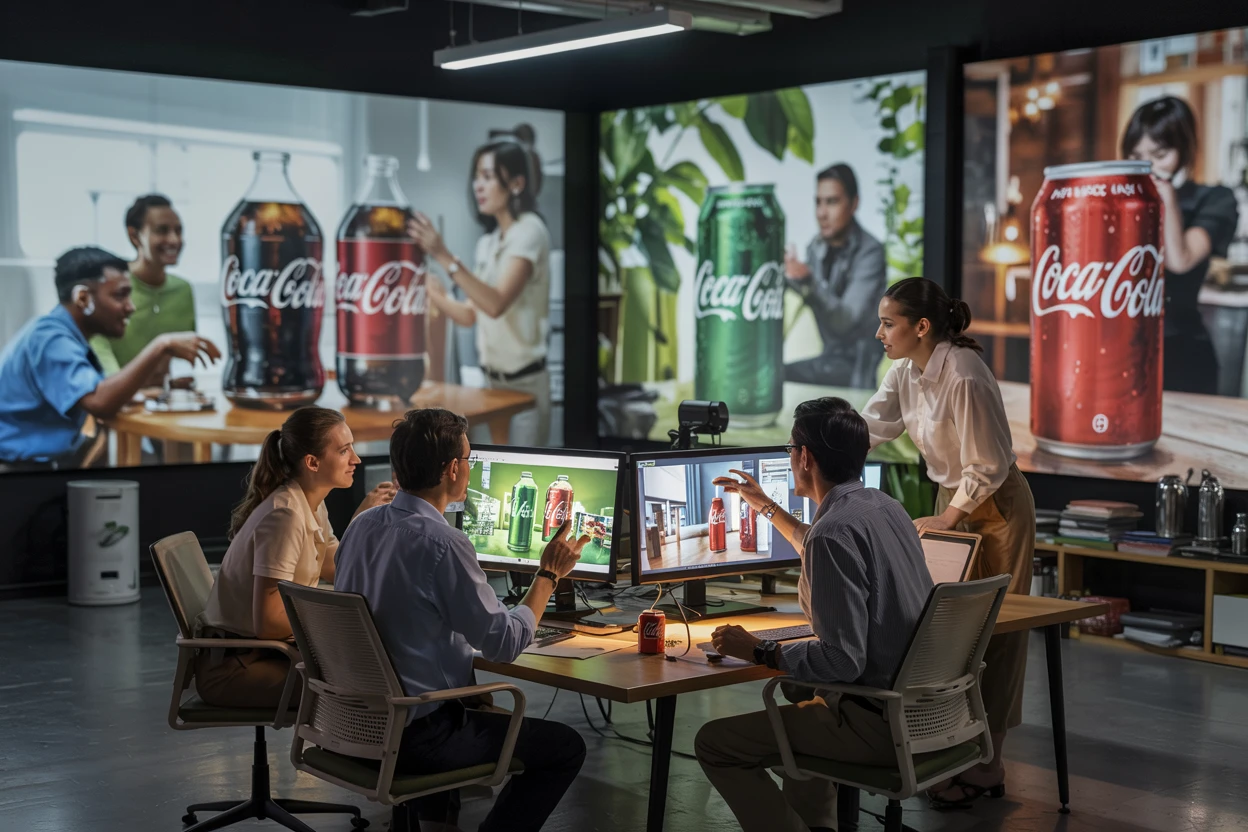
Coca-Cola n’expérimente pas seulement avec des outils émergents : la marque intègre profondément l’IA et la 3D dans ses flux de travail, en collaboration avec NVIDIA et des solutions de création virtuelle comme Omniverse.
L’IA et la 3D en temps réel : des outils, mais avant tout, un changement de culture
Le nouveau pipeline créatif
Anciennes méthodes : des semaines (voire des mois) de travail pour produire une publicité, une animation ou une campagne de packaging. Aujourd’hui, avec l’IA générative et la 3D en temps réel :
- Création accélérée : modélisation et rendu en quelques jours.
- Automatisation des tâches répétitives : l’IA génère des variantes de visuels, de slogans ou de fonds.
- Collaboration virtuelle : les équipes créent ensemble dans des environnements 3D immersifs.
Exemple concret : Coca-Cola peut désormais créer un jumeau numérique d’un nouveau produit, le visualiser en magasin, simuler une campagne dans plusieurs pays et tester la perception des clients… sans jamais quitter le studio virtuel.
IA générative : au service de l’imagination de la marque
L’IA générative n’est pas là pour remplacer la créativité humaine, mais pour l’amplifier. Coca-Cola utilise l’IA pour générer des concepts visuels, des slogans, ou même des idées de mise en scène inspirées de ses archives, de ses campagnes passées ou des tendances culturelles locales.
L’IA en tant que moteur de narration
- Formée sur des données propriétaires (branding, ton, histoire), l’IA devient une assistante stratégique.
- Elle peut proposer un contenu adapté à chaque marché, à chaque public, à chaque canal.
- Grâce aux grands modèles de langage, les messages restent cohérents tout en étant localisés.
Selon James Quincey, PDG de Coca-Cola :
“Nous voulons une IA qui respecte notre identité de marque, mais qui ouvre aussi des portes que nous n’aurions jamais envisagées.”
3D : un terrain de jeu infini
Avec NVIDIA Omniverse, Coca-Cola utilise la 3D pour prototyper rapidement ses produits, tester différentes finitions, créer des univers visuels pour les réseaux sociaux, et même simuler des interactions consommateurs en réalité augmentée ou en réalité virtuelle.
Vers des expériences immersives
Modélisation réaliste de bouteilles, canettes, présentoirs et matériaux de PLV.
Coca-Cola recrée ses bouteilles, canettes, réfrigérateurs et matériaux de PLV en 3D avec des détails époustouflants (reflets, textures, condensation…). Cela permet :
- Prototypage rapide sans production physique.
- Test visuel de plusieurs versions d’emballage.
- Simulation de leur présence en magasin ou dans des publicités.
Rendus photoréalistes instantanés grâce à l’IA.
Grâce à l’IA et à des outils comme NVIDIA Omniverse, les rendus sont générés en quelques secondes avec un réalisme saisissant :
- Ombres dynamiques, matériaux réalistes, profondeur de champ.
- Ajustements instantanés de l’éclairage ou du décor.
- Génération automatique de plusieurs variantes visuelles.
Intégration dans des mondes virtuels (métavers, expériences de jeu).
Les éléments 3D sont également utilisés dans des univers interactifs :
- Campagnes immersives dans le métavers ou des jeux vidéo.
- Filtres AR sur les réseaux sociaux.
- Tests marketing dans des jumeaux numériques de points de vente.
C’est une nouvelle façon radicale de penser la conception de produits, la publicité, ou même le commerce électronique immersif.
Perspectives : Coca-Cola en tant que pionnier du nouveau marketing
L’approche de Coca-Cola est un signal fort pour d’autres marques : la frontière entre technologie et créativité s’estompe. Le marketing de demain se construit dans des studios virtuels, avec des IA génératives comme copilotes.
Vers un nouveau standard industriel
Coca-Cola n’est pas seule. D’autres marques suivent :
- Nike utilise la 3D pour créer ses collections numériquement avant le prototypage physique.
- L’Oréal utilise l’IA pour tester des campagnes et analyser en temps réel les sentiments des consommateurs.
- Mercedes-Benz simule ses campagnes marketing dans des jumeaux numériques de villes.
L’industrie de la création de contenu est en train d’entrer dans une ère où :
- Les temps de production diminuent.
- Les expériences deviennent plus personnalisées et interactives.
- La narration est enrichie de nouvelles couches visuelles, sensorielles et culturelles.
Et maintenant ? Ce que cela signifie pour les créatifs et les marketers
Les compétences évoluent
Les créateurs doivent apprendre à travailler avec des IA plutôt que sans. La curiosité technologique devient un trait essentiel.
Les workflows doivent changer
Les équipes doivent adopter des outils collaboratifs, agiles et interconnectés. Le modèle de production linéaire laisse place à un modèle circulaire, en boucle rapide.
L’accessibilité se démocratise
Des plateformes comme Runway ML, Adobe Firefly, Canva Magic Studio, ou même MetaHuman Creator rendent ces technologies accessibles aux PME, agences, et freelances.
Conclusion
Coca-Cola montre qu’en 2025, le contenu de marque n’est plus juste une belle image ou un bon slogan. C’est un écosystème narratif, immersif, rapide et intelligent, façonné par l’IA et la 3D.
Ce que la marque construit aujourd’hui servira de référence pour demain : des récits plus puissants, plus visuels, plus adaptatifs. En bref, une nouvelle grammaire du marketing où les créateurs interagissent avec des machines… pour mieux atteindre les humains.