
Hunyuan3D 2.0 : révolutionner la création d'actifs 3D
Dans le paysage en évolution rapide du contenu généré par l’IA, Hunyuan3D 2.0 de Tencent a émergé comme une solution révolutionnaire pour la création d’actifs 3D, promettant de transformer un processus traditionnellement long en un qui ne prend que quelques secondes. Cet article synthétise plusieurs perspectives pour fournir un aperçu complet de cette technologie, de ses capacités, de ses limites et de son impact potentiel sur divers secteurs.
Fondations Techniques et Architecture
Hunyuan3D 2.0 représente une avancée significative dans les systèmes de synthèse 3D, spécialement conçus pour générer des actifs 3D texturés en haute résolution. Le système se compose de deux composants fondamentaux : le modèle de génération de forme Hunyuan3D-DiT et le modèle de synthèse de texture Hunyuan3D-Paint.
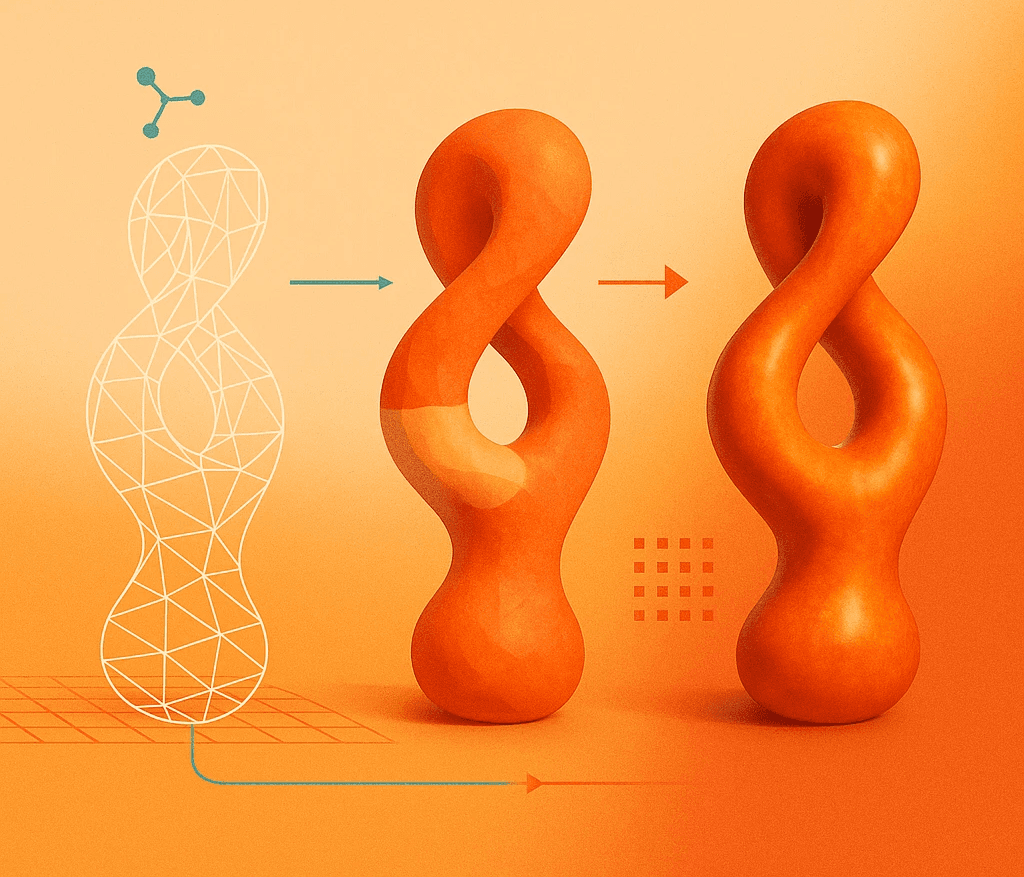
L’architecture utilise un pipeline de génération en deux étapes qui sépare stratégiquement les défis de création de forme et de texture. Cette approche commence par la création d’une structure de maillage de base, suivie de la synthèse d’une carte de texture pour ce maillage. Ce découplage offre de la flexibilité, permettant au modèle de synthèse de texture de travailler à la fois avec des maillages générés par l’IA et des maillages créés manuellement.
Le modèle de forme génératif repose sur un transformateur de diffusion basé sur l’écoulement conçu pour aligner précisément les géométries avec les images conditionnelles d’entrée. Pendant ce temps, le modèle de synthèse de texture utilise de forts préjugés géométriques et de diffusion pour créer des cartes de texture vibrantes en haute résolution.
Performance et Benchmarks
Selon les évaluations techniques publiées, Hunyuan3D 2.0 démontre une performance supérieure par rapport aux solutions existantes. Le système atteint un score CLIP de 0,809, dépassant à la fois les alternatives open-source et propriétaires dans les benchmarks.
La version standard peut générer un modèle 3D complet en environ 25 secondes, tandis qu’une version plus petite et optimisée peut obtenir le même résultat en seulement 10 secondes. Cette amélioration remarquable de la vitesse transforme ce qui serait typiquement un processus de plusieurs jours pour les artistes 3D en une opération presque instantanée.
Des évaluations systématiques indiquent que Hunyuan3D 2.0 surpasse les précédents modèles à la pointe de la technologie dans des métriques clés telles que :
- Précision des détails géométriques
- Fidélité de l’alignement des conditions
- Qualité et vivacité de la texture
- Vitesse de génération
Fonctionnalités Clés et Innovations
Hunyuan3D 2.0 introduit plusieurs fonctionnalités innovantes qui le distinguent des solutions précédentes :
- Flexibilité à Double Entrée : Le système accepte à la fois des descriptions textuelles et des images en tant qu’entrées, élargissant les possibilités créatives.
- Orientation Adaptive Sans Classificateur : Cette fonctionnalité aide à garantir la cohérence et les détails dans les modèles 3D générés.
- Positionnement de Caméra Optimisée : Le système positionne stratégiquement les caméras virtuelles pour capturer un maximum de détails visibles, en particulier pour les zones difficiles telles que les sommets et les fonds des objets.
- Traitement des Entrées Hybrides : Cela permet un contrôle plus nuancé sur la sortie générée.
- Plateforme Hunyuan3D-Studio : Une plateforme polyvalente et conviviale qui simplifie le processus de création d’actifs 3D tant pour les utilisateurs professionnels qu’amateurs, permettant la manipulation de maillage et l’animation.
- Besoins Computationnels Faibles : Le système est optimisé pour générer des modèles haute résolution sans nécessiter de puissance de calcul excessive.
- Intégration avec les Outils Standards : Le support des formats de fichiers 3D populaires assure la compatibilité avec les logiciels standards de l’industrie tels que Blender.
Applications Pratiques
Les applications potentielles de Hunyuan3D 2.0 s’étendent sur plusieurs secteurs :
Développement de Jeux
Les studios de jeux peuvent rapidement prototyper des personnages, des environnements et des objets, accélérant considérablement le processus de développement.
E-commerce et Vente au Détail
Les détaillants en ligne peuvent rapidement générer des modèles 3D de produits pour une visualisation interactive, améliorant ainsi l’expérience d’achat.
Cinéma et Divertissement
Les sociétés de production peuvent utiliser cette technologie pour prévisualiser des effets spéciaux, créer des éléments de décor ou développer des modèles conceptuels.
Design et Architecture
Les designers peuvent rapidement transformer des croquis ou des descriptions en modèles 3D pour des présentations ou des perfectionnements ultérieurs.
Éducation et Recherche
Les établissements éducatifs peuvent créer des modèles 3D détaillés à des fins d’instruction dans divers sujets.
Impact sur l’Industrie XR (Réalité Étendue)
Hunyuan3D 2.0 joue un rôle transformateur dans l’écosystème des technologies XR (réalité virtuelle, augmentée et mixte) et le métavers. La capacité à générer rapidement des actifs 3D de haute qualité aborde l’un des principaux obstacles au développement d’expériences immersives : la création de contenu 3D à grande échelle. En alimentant les environnements virtuels avec des objets, des personnages et des espaces générés en quelques secondes, cette technologie permet aux développeurs XR de construire des mondes virtuels plus riches et diversifiés. Pour la réalité augmentée, elle offre la possibilité de créer des superpositions 3D contextuelles instantanées adaptées à l’environnement physique de l’utilisateur. Dans le contexte du métavers émergent, Hunyuan3D 2.0 démocratise la capacité à contribuer au contenu spatial, permettant même aux utilisateurs sans compétences en modélisation 3D de matérialiser leurs idées dans ces nouveaux espaces numériques partagés.
Communauté et Développement Open-Source
Un des avantages les plus significatifs de Hunyuan3D 2.0 est sa nature open-source. Le système est construit sur des principes open-source, permettant des contributions communautaires et la transparence.
La communauté a déjà développé plusieurs extensions, y compris des outils d’installation Windows, le support ComfyUI et des addons pour Blender. Cet écosystème en croissance démontre l’adaptabilité de la technologie et l’enthousiasme de la communauté pour construire sur la fondation fournie par Tencent.
Mises à Jour Récentes et Améliorations
Depuis sa sortie initiale en janvier 2025, Hunyuan3D 2.0 a reçu plusieurs mises à jour majeures :
- Avril 2025 : Publication de Hunyuan3D-Paint-v2-0-Turbo et du pipeline de génération de texture multivue
- Mars 2025 : Introduction de modèles turbo, y compris Hunyuan3D-2-Turbo et Hunyuan3D-2mini-Turbo
- Février 2025 : Publication du module d’amélioration de texture et de Hunyuan3D-DiT-v2-0-Fast, un modèle de distillation dirigeante qui réduit le temps d’inférence de moitié
- Janvier 2025 : Publication d’un addon Blender pour Hunyuan3D 2.0
Ces mises à jour démontrent l’engagement de l’équipe à améliorer la technologie et à répondre aux besoins de la communauté.
Comparaison avec les Alternatives
Comparé à des technologies similaires, Hunyuan3D 2.0 offre plusieurs avantages distinctifs : sa génération découplée de géométrie et de texture, sa vitesse et sa disponibilité open-source le distinguent nettement.
Cependant, certaines limitations existent. Les modèles générés présentent souvent des maillages denses et triangulés avec une topologie moins qu’idéale, ce qui peut nécessiter des ajustements manuels pour certaines applications telles que l’animation ou le développement de jeux. De plus, la projection de texture peut parfois être inconsistante, entraînant des mises en page UV chaotiques, et la plateforme tend à exceller davantage dans les créations stylisées plutôt que photoréalistes.
Perspectives d’Experts et d’Utilisateurs
Du point de vue des artistes 3D professionnels, Hunyuan3D 2.0 représente à la fois une opportunité et une perturbation potentielle. Plutôt que de remplacer les artistes humains, Tencent positionne la technologie comme un outil collaboratif qui gère les tâches techniques, permettant aux créateurs de se concentrer sur des décisions artistiques.
Du point de vue de la communauté des utilisateurs, la technologie a généralement été bien accueillie, notamment pour sa vitesse, sa qualité et son accessibilité. Les utilisateurs ont noté qu’elle excelle particulièrement dans la génération de modèles 3D très détaillés et visuellement nets pour des conceptions stylisées.
Implications Futures
À mesure que le contenu 3D devient de plus en plus central dans le jeu, l’e-commerce, le divertissement et même les réseaux sociaux, des outils comme Hunyuan3D 2.0 suggèrent un avenir où la création de mondes virtuels devient significativement plus accessible.
La capacité de la technologie à transformer à la fois des images et du texte en modèles 3D détaillés pourrait démocratiser la création de contenu 3D, permettant à des créateurs sans expertise traditionnelle en modélisation 3D de donner vie à leurs visions.
Pour les artistes et studios 3D professionnels, la technologie pourrait remodeler les flux de travail, permettant des itérations plus rapides et une exploration des concepts avant de s’engager dans un travail de modélisation manuelle détaillée.
Conclusion
Hunyuan3D 2.0 représente un bond important en avant dans la création de contenu 3D assistée par IA. En réduisant drastiquement le temps et l’expertise technique nécessaires pour générer des actifs 3D de haute qualité, il a le potentiel de transformer plusieurs industries et flux de travail créatifs.
Alors que la technologie a encore certaines limitations et ne peut pas remplacer totalement les techniques de modélisation 3D traditionnelles pour toutes les applications, son développement rapide et sa nature open-source suggèrent que nous ne faisons qu’effleurer ce qui est possible.
Alors que la communauté continue de construire et d’améliorer cette fondation, nous pouvons nous attendre à des outils de génération 3D encore plus sophistiqués et accessibles dans le futur, remodelant potentiellement notre manière de créer et d’interagir avec du contenu virtuel dans tous les domaines.