
Ray-Ban Meta Smart Glasses : affichage AR et ventes record
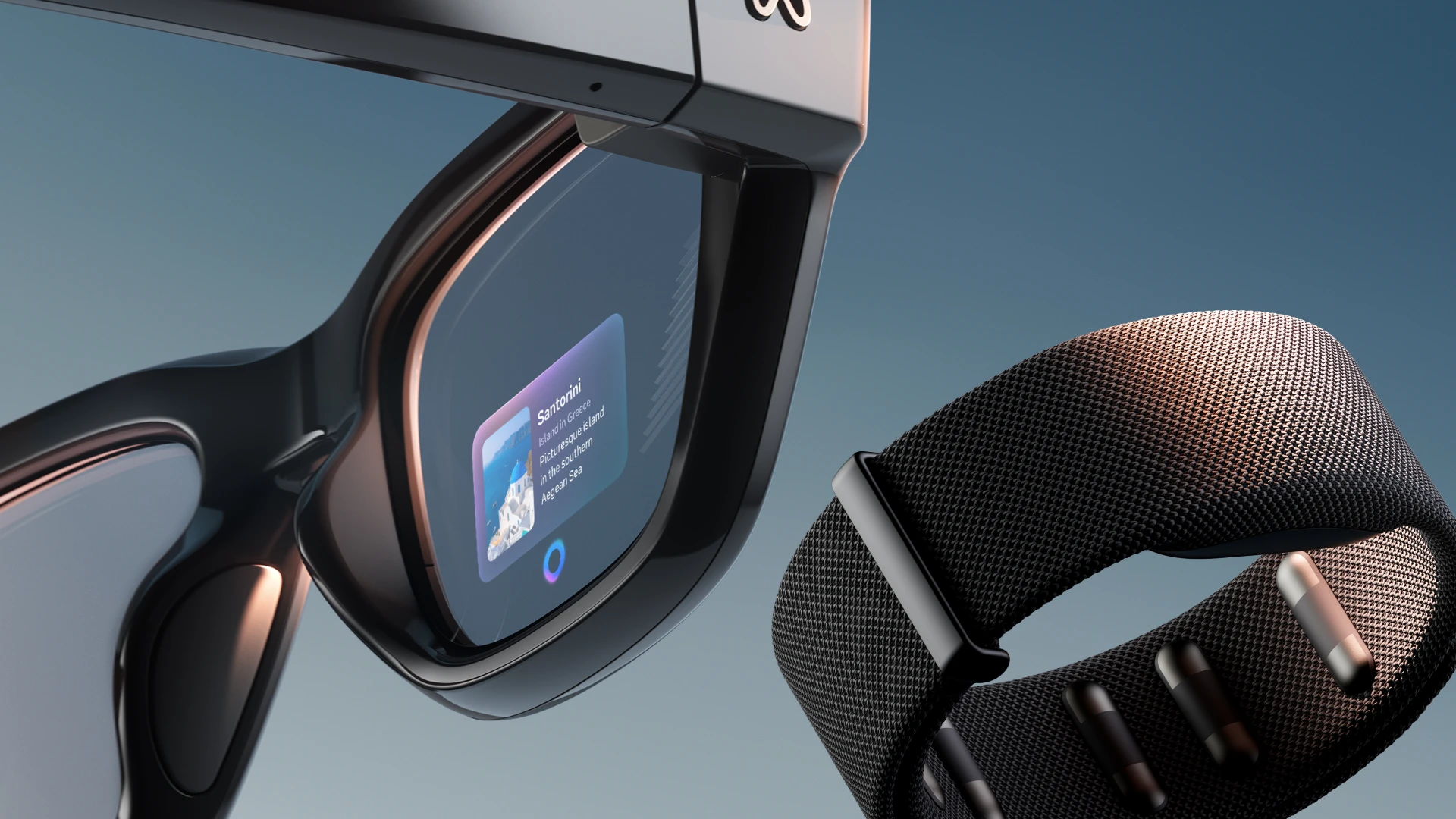
Meta a dévoilé des ajouts révolutionnaires à sa gamme de lunettes intelligentes lors de Connect 2025, notamment les premières lunettes Ray-Ban Display destinées au grand public avec des écrans intégrés — une étape importante sur le marché des technologies portables.
La Grande Nouvelle : Des Lunettes avec de Petits Écrans d’Ordinateur
Les lunettes Ray-Ban Display (799 $) disposent d’un petit écran d’ordinateur intégré dans le verre droit. L’écran de 600x600 pixels atteint 5 000 nits de luminosité pour une visibilité en extérieur, positionné sous le champ de vision normal pour éviter les distractions constantes.
Le bracelet Meta Neural Band lit les signaux électriques des mouvements des doigts grâce à la technologie d’électromyographie de surface (sEMG). Les utilisateurs peuvent contrôler les lunettes par des gestes—balayages du pouce pour la navigation, pincement pour zoomer, et rotation du poignet pour le volume—sans mouvements de main visibles.
Les lunettes pèsent 2,4 onces, avec le Neural Band à 1,5 once et une autonomie de 18 heures. La disponibilité commence le 30 septembre 2025, dans les points de vente physiques uniquement, notamment Best Buy, LensCrafters, Sunglass Hut et les magasins Ray-Ban, avec une expansion au Canada et en Europe prévue début 2026.
Les Lunettes Intelligentes Régulières Améliorées
Les lunettes intelligentes Ray-Ban Gen 2 (379 $) offrent une autonomie de 8 heures—le double de la version précédente—avec 48 heures supplémentaires grâce à l’étui de chargement. La caméra de 12 mégapixels améliorée capture des vidéos 3K nettes à 60 images par seconde, disponible immédiatement.
Des Lunettes de Sport pour les Personnes Actives
Les lunettes Oakley Meta Vanguard (499 $) sont lancées en octobre, conçues pour les athlètes avec des caméras positionnées au centre, un champ de vision élargi, une stabilisation vidéo améliorée et une autonomie en utilisation mixte de 9 heures.
Les Chiffres Sont Incroyables
Les lunettes intelligentes Ray-Ban ont connu un succès commercial remarquable : plus de 2 millions de paires vendues depuis fin 2023, avec 1 million d’unités en 2024 seulement. Les revenus du premier semestre 2025 ont triplé, devenant les meilleures ventes dans 60 % des magasins Ray-Ban européens. Les objectifs de production dépassent 10 millions de paires par an d’ici 2026.
Le secteur des lunettes intelligentes a connu une croissance de 210 % en 2024, largement portée par le succès de Ray-Ban, avec des projections indiquant une croissance annuelle de 60 % jusqu’en 2029.
Que Peuvent Réellement Faire Ces Lunettes ?
Les fonctionnalités comprennent les notifications de messages (WhatsApp, Instagram, SMS), les appels vidéo avec perspective partagée, la navigation tour par tour avec cartes en direct, et la photographie avec viseur en temps réel. Les capacités de divertissement incluent le streaming de médias sociaux, les commandes musicales, et la traduction en temps réel pour les voyageurs.
La Concurrence S’Intensifie
Samsung développerait des lunettes intelligentes utilisant l’IA de Google, tandis qu’Apple explore une sortie en 2027. Neuf entreprises supplémentaires ont lancé des produits concurrents début 2025, avec des fabricants chinois proposant des alternatives économiques.
Ce Que Cela Signifie pour le Futur
L’objectif est centré sur une intégration technologique transparente — les informations importantes apparaissent naturellement dans le champ de vision des utilisateurs plutôt que de nécessiter une consultation constante du téléphone. Quarante pour cent des acheteurs de Ray-Ban Meta choisissent des verres photochromiques pour un port toute la journée.
Les mises à jour logicielles améliorent continuellement les capacités, notamment le support linguistique (anglais, français, italien, espagnol), la reconnaissance vocale améliorée, les applications musicales et podcast élargies, et les fonctionnalités de caméra avancées.
Devriez-vous Envisager des Lunettes Intelligentes ?
Ces lunettes conviennent aux utilisateurs qui souhaitent une connectivité sans vérification constante du téléphone, aux photographes et vidéastes fréquents, aux voyageurs ayant besoin de fonctionnalités de traduction, et aux premiers adopteurs de technologie. Elles peuvent ne pas convenir à ceux qui sont mal à l’aise avec des appareils équipés de caméras, à ceux nécessitant des prescriptions en dehors de -4 à +4 dioptries, ou à ceux préférant les méthodes photographiques traditionnelles.
En Résumé
Les lunettes intelligentes Ray-Ban Meta sont passées de gadget de niche à produit grand public en deux ans. Avec 2 millions de paires vendues et une production portée à 10 millions par an, elles ont clairement satisfait la demande des consommateurs. La version Display représente la prochaine évolution, apportant des fonctionnalités de science-fiction à la lunetterie quotidienne grâce à un design pratique qui ressemble à des lunettes conventionnelles plutôt qu’à des prototypes encombrants comme les premières tentatives de Google Glass.