Marine nationale
Marine nationale — 400 Years in Augmented Reality
For four centuries, the French Navy has protected France on every ocean. To mark its 400th anniversary in 2026, the Navy’s communication agency COMMLAB wanted to share that heritage with the general public, outdoors and in a format people would remember. COMMLAB designed the content; ARGO brought it to life in augmented reality.
Toulon: four posters that set sail
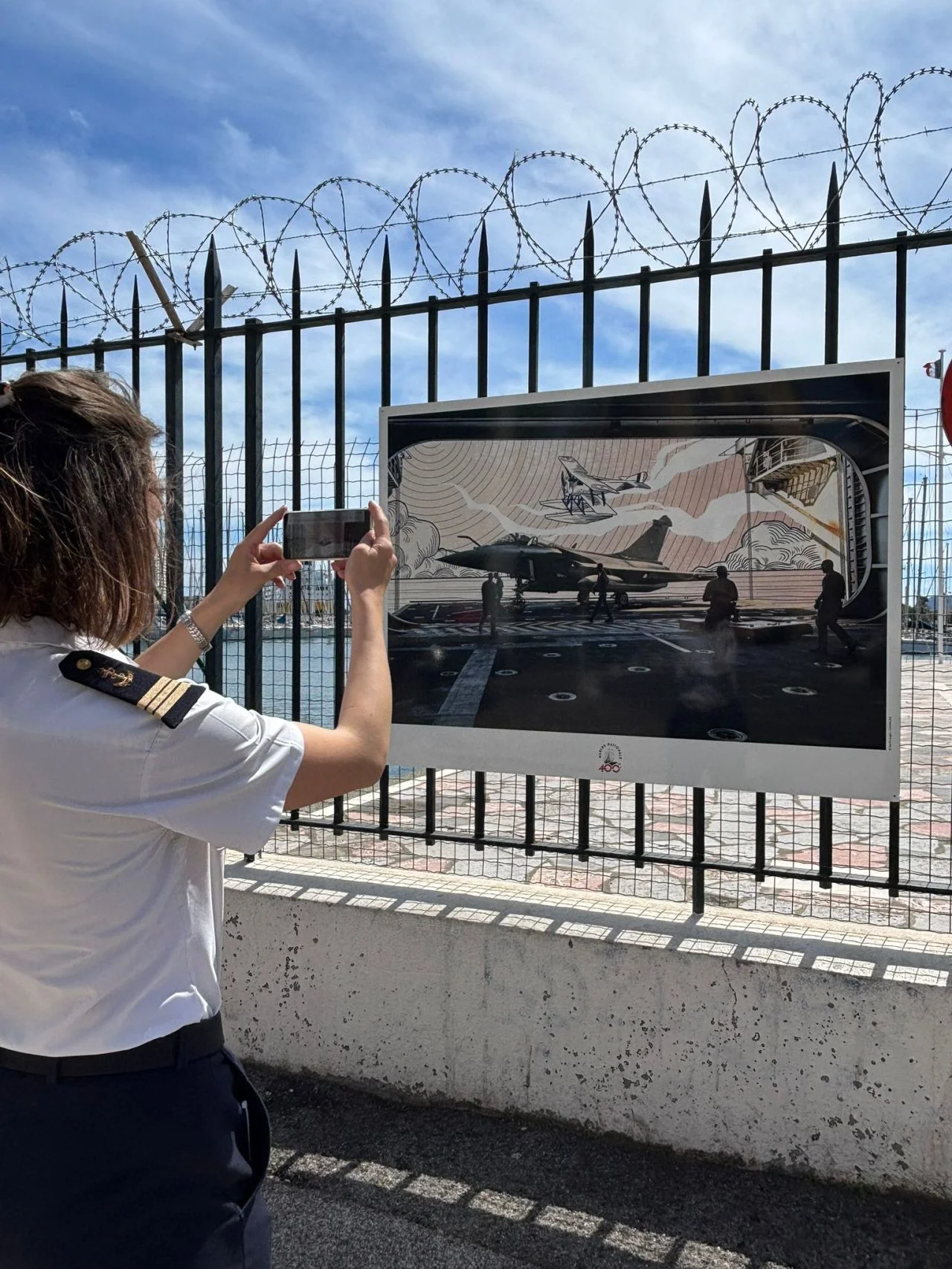
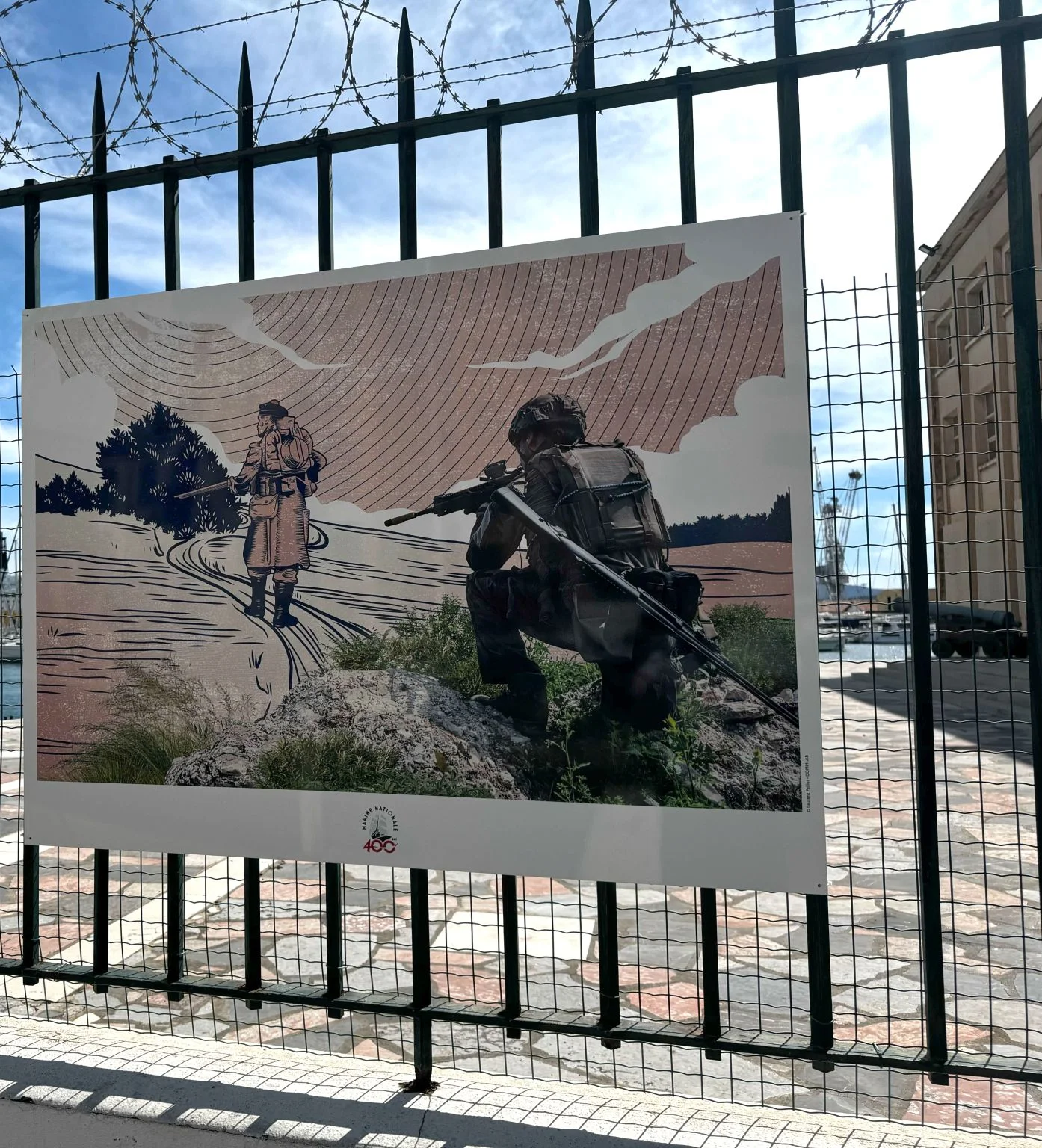
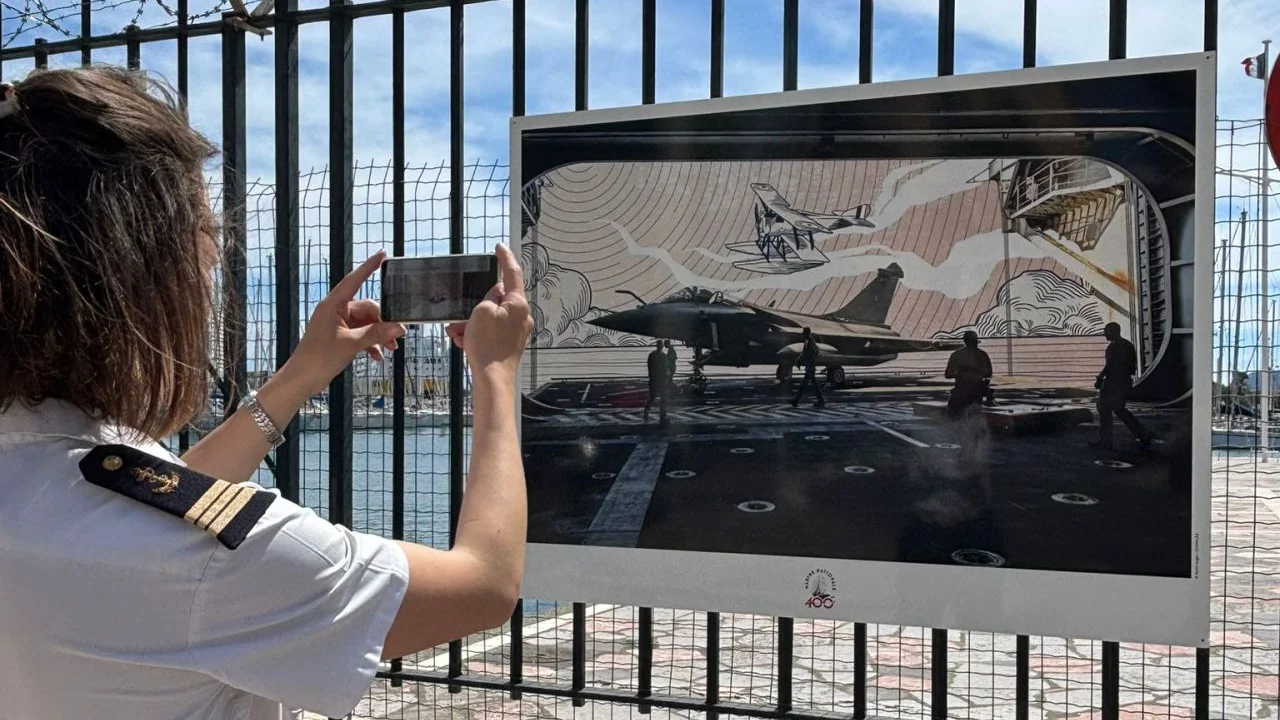
On the railings of the forecourt of the Préfecture maritime in Toulon, at the end of the quai Cronstadt, four large illustrated posters each present one world of the Navy: naval aviation, submarines, the marine commandos (fusiliers marins) and surface ships. Each illustration, drawn by COMMLAB’s art director, blends a historical scene with a present-day one.
Visitors scan the QR code, their browser opens, and the poster comes to life in front of them, animated by COMMLAB’s motion designers. From the Hermione to the Jauréguiberry, from the Gymnote to the Casabianca, from the Hanriot seaplane to the Rafale: 400 years of history unfold on the phone, with no app to install. The exhibition is set to travel to several French cities during the anniversary year.
Paris: a Rafale lands at the Trocadéro
For the same anniversary, the street artist Crey 132 painted a life-size reproduction of the flight deck of the aircraft carrier Charles de Gaulle on the Trocadéro esplanade, opposite the Eiffel Tower. ARGO extended the installation into the digital world: by scanning a QR code on site, visitors watch a Rafale land on the deck in augmented reality, right from their smartphone, and get a reduced-price ticket for the neighbouring Musée national de la Marine.
Built for the general public
Both experiences were designed for a very large and varied audience:
- Instant access: a QR code and the phone’s browser, nothing to download;
- Faithful to the artists’ work: interface, logo animation and messages follow COMMLAB’s mock-ups, in a translucent “liquid glass” style;
- Tested in the field, in front of the naval base with a panel of visitors, then refined over several rounds;
- Robust on real phones, with clear guidance when a battery saver mode blocks video autoplay and a fallback message for unsupported browsers.
The project shows how WebAR can enrich public space: a poster on a railing or a painting on the ground becomes a gateway to history and heritage, open to anyone with a smartphone.